Thursday, September 30, 2010

100 MILE DIET: local eating for global change


Sounds intriguing, doesn't it?

But think about it - if we all started eating locally, as in products produced within 100 miles of our home base, think of how things would change, how our diet would change.

Sounds too restrictive, impossible, unrealistic, painful doesn't it! lol

Well, in reality, up until the 1940's, this was the norm for most Americans. It still holds true for many people around the world.


Of course, we always had our luxury items like oranges and lemons, coffee, tea, and chocolate/cacao, but for the most part, we ate what was produced within a reasonable distance of our home. We canned, dried, cured and stored foods to eat throughout the winter.

Since then, we live in a time of the winter tomato - flown halfway around the world, with 1/10th the flavor, and at 5 times the cost of a real, local tomato of summer.

At Whitmore Farm, we take our seconds from our market tomatoes, still picked at the height of their flavor, and freeze whole and pureed tomatoes which is about as easy as it gets. In January, its simple to pull out a block of tomato for wonderful winter soups and sauces and a real taste of summer in January! Fantastic!


Entire food traditions have slowly withered away. Take winter squash, formerly a STAPLE of the winter diet, high in vitamins A, E, fiber, and flavor.

Who eats winter squash anymore? I mean really!?


So here's an interesting idea then, the 100 mile diet.

The authors of this and other similar websites call it the 'new organic' - better for your health, the environment, your local economy, local farms, and the animals and plants involved.

'Plants?' you say - think of all the grief poor spinach took last year with the great spinach scare because a factory farm contaminated their spinach crop with E. coli tainted water, sickening hundreds? Peanuts again the next year! Talk about unsafe foods!

Also, the 100 miled diet helps reconnect the eater with seasonal foods, foods that have fallen out of favor but have so much to offer in terms of flavor, variety, and nutrition.


While a 6 or 12 month commitment to eating local only might seem overwhelming, consider sponsoring a local dinner for friends and family.

Try something new - pick up a fruit or vegetable you've never used before, take it home, and check online for a tasty recipe to try.

Join a CSA for a season and try to use everything you get - seriously, just TRY! lol Most CSA members complain that they can't come close to finishing everything in their box or basket. A CSA can be a very economical way of feeding your family, all the while supporting local agriculture.

Most city folks are surprised at how much fun they have visiting and working on the farm, and for those of you on a budget, many CSA allow the exchange of labor for food shares.


To get you started, here's a recipe from FOOD&WINE for spicy squash with cavatelli, but I substitute whatever kind of pasta I have - larger pasta like rigatoni work better than spaghetti or linguini:

INGREDIENTS

  1. 1/4 cup plus 2 tablespoons extra-virgin olive oil
  2. 6 large garlic cloves, thinly sliced
  3. 1 large red onion, thinly sliced
  4. 2 teaspoons crushed red pepper
  5. 2 pounds winter squash—peeled, seeded and cut into 1/2-inch cubes
  6. 1 tablespoon finely chopped thyme
  7. Salt and freshly ground pepper
  8. 1 1/2 pounds cavatelli, small shells, rigatoni, etc
  9. 3/4 cup freshly grated caciocavallo, pecorino or Parmesan cheese, plus more for serving.

DIRECTIONS

  1. 1. Bring a large pot of salted water to a boil. In a large, deep skillet, heat the olive oil. Add the garlic, onion and crushed red pepper and cook over moderately high heat, stirring occasionally, until the garlic and onion are softened, about 5 minutes. Add the squash and thyme, season with salt and pepper and cook for 5 minutes, stirring occasionally. Cover and cook over moderately low heat, stirring occasionally, until the squash is tender, about 5 minutes.

    2. Meanwhile, add the cavatelli to the boiling water and cook until al dente. Drain, reserving 1 cup of the pasta cooking water. Add the cavatelli to the squash mixture in the skillet, then stir in 1/2 cup of the pasta cooking water and toss gently to combine. Add the 3/4 cup of caciocavallo, season with salt and pepper and stir gently; add a little more pasta water if necessary. Serve the pasta right away, passing more cheese at the table.


    ENJOY!


Wednesday, September 29, 2010

SLOW FOOD in the U.S.

With all the press recently about food safety and the morbid obesity epidemic, I decided to feature a movement I support, the Slow Food Movement and SLOWfoodUSA.

SLOW FOOD originated in Italy by Carlo Petrini in 1986 in reaction and opposition to the opening of a Mc Donald's in Rome near the Spanish Steps. The name is meant to evoke all that is opposite or contrary to the fast food movement.

Initially focused on preserving traditional and regional cuisine and promoting farming of plants, seeds and livestock characteristic of the local ecosystem, the slow food movement has expanded its scope and offers intriguing ideas about how and what we eat affects our lives.

This would be the French concept of terroir which literally translates into 'land'. In reality, terroir really refers to the unique characteristics of any area (soil, geography, culture) that produce unique foods, and that these unique foods are integral to our culture, the environment, and our food enjoyment, and need to be protected.

While most commonly associated with more celebrated products like champagne (from the Champagne region of France) for example, even a relatively young country like the U.S. has it's own terroir - vidalia onions, vermont cheddar and maple syrup, georgia peaches, and washington apples.

Terroir could also include items like Buffalo chicken wings, spedie meat (Binghampton, N.Y.), or scrapple in the South. Perhaps not as refined as champagne, but ours....all ours nonetheless!


SLOW FOOD has since grown into an organization with over 100,000 members in 132 countries.

The Slow Food movement incorporates a series of objectives within its mission, including:

  • promoting the preservation of heirloom varieties of plants and heritage breed livestock.
  • development of the 'Ark of Taste' for foods of exceptional quality or in danger of extinction
  • preserving and promoting local food traditions
  • organizing celebrations of local food items and traditions, often in the context of community.
  • promoting food education including the risks of 'fast food', the antithesis of 'slow food'
  • education about the risks of large agribusiness and factory
  • education about the risks of monoculture
  • promoting the preservation of small and family farms
  • lobbying for the inclusion and promotion of strong local food systems, increased organic and sustainable farming
  • lobbying against genetic engineering and GMO products in our food chain
  • lobbying against the use of pesticides
  • encouraging ethical buying in the marketplace such as fair trade products

Recent events organized by Slow Food USA include:

Pie on the Porch, Miami, FLA Sept 25th, 2010

Clash Farm to Table, Falmouth, MA Sept 26th, 2010

Whatcom Harvest Dinner, Ferndale, WA Sept 26th 2010

Heirloom Harvest Farm Barbeque, Exeter, RI Sept 26th, 2010

Screening of 'Grown in Detroit', St. Louis, MI Sept 27th, 2010

Pawpaws & Persimmons, Ann Arbor, MI Oct 2nd, 2010

Sounds awesome, doesn't it!

I think slow food represents an organization working towards a food delivery system that we could all live with. A 'slow'-er America would help to reverse some of the damaging affects that our 'modern' agricultural system has had on our health, our environment, and our culture.

As SLOW FOOD puts it: 'supporting good, clean, and fair food'! I couldn't say it better or more simply myself.

Take a minute and look over the Slow Food USA home page and consider becoming active in your local Slow Food Movement!

It's a BOY!

....and a GIRL!

Well, actually two boys and two girls!

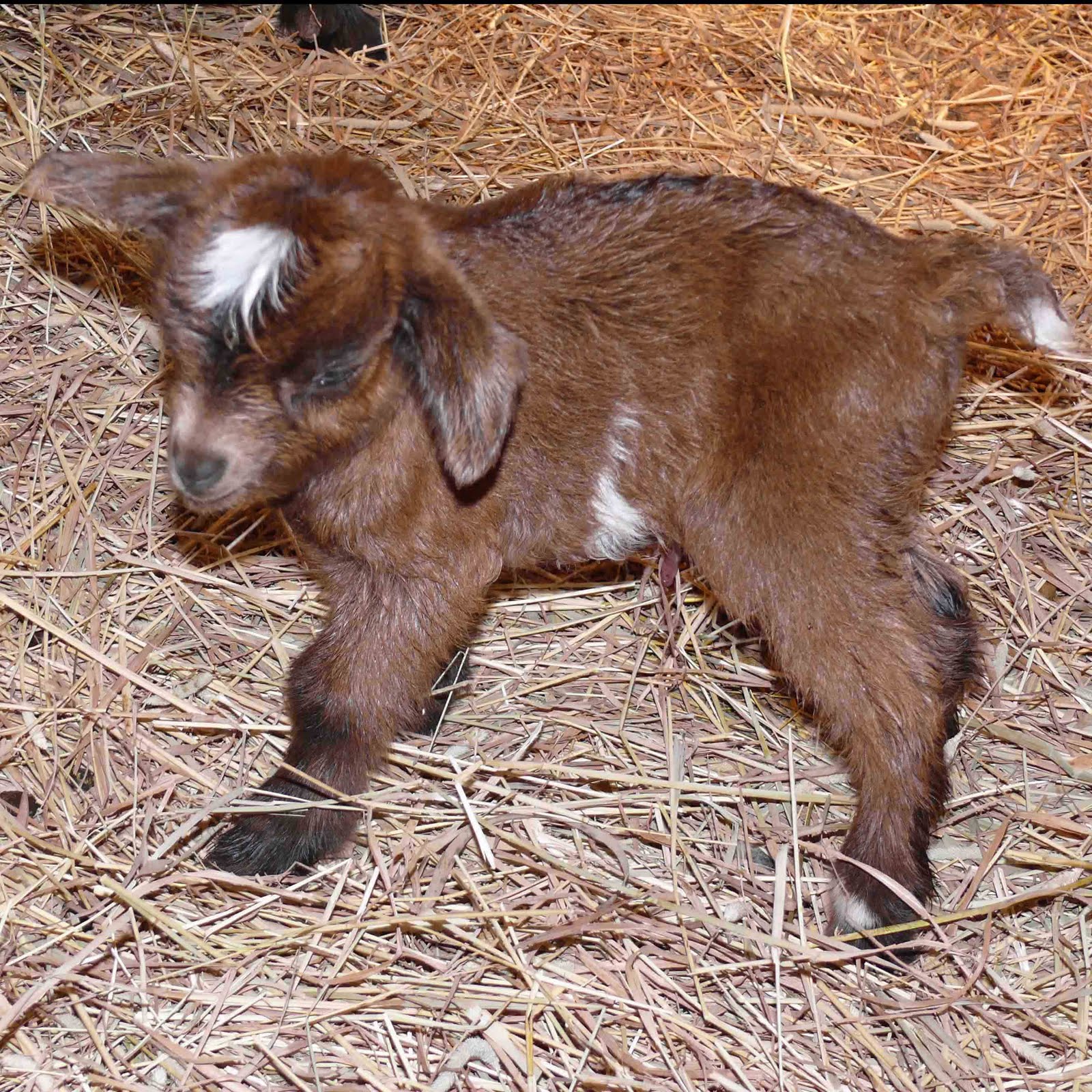
Heidi Ho and Kate both kidded yesterday without incident.


Heidi Ho doeling


Heidi Ho doeling - looks like the same doeling in a different color, doesn't it!


Kate buckling - he's a total firecracker!


AY MATIE! I would be Kate's other pirate buckling!

We offer our congrats to our two awesome mums!

Tuesday, September 14, 2010

Dutch cheese is lekker!


Lekker : adjective (slang) delicious, tasty, luscious, choice, savoury, palatable, dainty, delectable, mouthwatering, yummy , scrumptious (informal), appetizing, toothsome, ambrosial

Example: 'We had a really lekker meal.'

Recently, Will and I had the pleasure of visiting Holland for two purposes:
  1. to research a new model for humane egg production on a commercial scale, the Rondeel model
  2. to visit a sheep farm that produces cheese from a traditional, non-dairy breed of sheep, the Texel.
Our trip started in Amsterdam where we were able to visit a couple of neighborhood farmer's markets. Dutch friends were able to confirm a renewed interest in locally-produced products and a resurgence of interest in farmer's markets amongst the Dutch.


We did look for locally-produced products and farms featured at local restaurants, but really didn't see as much of this as is common in the U.S. these days.

After a day in Amsterdam, our first stop was a day trip to Barneveld to visit the poultry museum, the Pluimveemuseum. There was an interesting display on the history of the chicken in Holland including several breeds developed in Holland like the Barneveld and Welsummer. These two breeds are known for their dark brown eggs which may look familiar to those of you enjoying Whitmore Farm eggs - we raise Welsummers!

Barneveld chickens

The primary purpose of our visit however was a visit to a commercial poultry operation using the Rondeel model. This model is offered as a humane option for commercial egg production by the Rondeel organization in Holland. http://www.rondeel.org/

The basic design of the structure was a central service core, with laying areas and 'lounge' areas numbered 1 and 2 below, and then a ring of open space for ranging, scratching and such (area 3).
Unfortunately, as Will explained, chickens typically form 'family groups' compromised of a rooster and a group of hens up to about 20 birds in a more natural environment.

When crowded in commercial production facilities, this normal social structure breaks down and pathologic behavior emerges - pecking and egg-eating being two examples.

Consequently, hens are debeaked to prevent damage from pathologic pecking, eliminating their ability to 'scratch', further worsening this disconnect from normal habitat, behavior, and family structure.


Stress also significantly and negatively impacts the immune system, increasing the chances of disease, decreasing production, and increasing emergence of pathogenic organisms like salmonella and shigella in the end product.

I think both Will and I were disappointed with the end product, although it was clearly was more humane than the current commercial egg production model found in the U.S.

The second part of our trip was a visit to the island of Texel, in the western end of the Friesian Islands, to the north of Amsterdam.

Our primary point of interest was a visit to De Waddel Farm, a traditional farm raising Texel sheep for meat AND dairy. De Waddel was one of only 2 farms left on the island still producing traditional Texel cheese using unpasteurized sheep's milk.

De Waddel 'schapenkass' or cheese shop!

De Waddel, circa 1625

These are some fine examples of Texel sheep. The breed is best known for phenomenal muscling and is generally considered a meat sheep. Their wool is of medium grade and has little value in today's wool market.

Texel's have a distinctive look with a clean head, heavy muscling, and a very BLOCKY head that strikes fear in the heart of most shepherds. When it comes to lambing time, imagine a square peg and a round hole - well, you get the idea.


The Bakker Family and Jan-Willem in particular took 3 hours out of his busy day to discuss his experiences with the Texel breed, management of his sheep, and what life is like for shepherds in Holland these days. It was a pretty incredible day and we enjoyed some unusually nice weather.

The cheese making workshop, attached to the main house


Some of the finished product on display. The Bakkers run a cheese shop from their house and sell locally to residents, tourists, and restaurants.

They sell 3 types of Texel cheese - young, 6 months, and 1 year.

The young cheese has a very creamy texure and all 3 have a natural rind. The 1 year is very similar to a parmesan or other sharp, dry cheese, fantastic for cooking as well as for eating.

Uncle Baker, the local postman, stops for a visit and coffee

We ended our tour with an opportunity to sit with the Bakkers and enjoy some coffee and cookies, and look over the elder Mr. Bakker's book chronicling the development and history of the Texel breed.

Unfortunately, it is only available in Dutch at present - anyone out there interested in translating and publishing an English version?


Will, Jan-Willem, and Mouse (Jan's assistant farmer) examine his best ram recently back from a Texel show. Jan said that his rams typically don't win because his farm specializes in a larger-framed sheep currently out of favor with breeders in Holland.


A wool shop in the main town on the island of Texel, Den Burg.

For the shepherds amongst you, here are a few interesting tid-bits of information and observations from our visit to the Bakker farm:
  • the wool was definitely of a finer texture than the wool we've examined on American Texels. The wool has very little lustre.
  • we saw Texels in many shades of blue, black, and grey although only white is allowed for registration.
  • the Bakkers are experimenting with crosses using the Friesian sheep (a traditional dairy breed from the islands to the east of Texel).
  • there was limited intensive rotational grazing being used.
  • Footrot is ubiquitous - all pastures and farmland were very damp with a lot of mud and standing water. The Bakkers vaccinate with the rot vaccine which causes a transient febrile illness in their sheep.
  • The Bakkers run about 500 ewes on 50 hectares, about 120 acres of sandy soil. They are limited on how much fertilization they can apply to something like 40 #'s per acre.
  • There appear to be no restrictions on the sale of unpasteurized cheese products.
  • Most lambs are sold at about 10-12 weeks (?) for about 100-110 euros each!
We recently introduced a Texel from Bev Pearsall's Farm near us in Thurmont and are excited to see what affect this has on our carcass quality in next year's product. Bev's Texels have been winning the carcass competition at the Maryland Sheep & Wool for years and we are very fortunate to have access to stock from such an accomplished breeder in our area!

Texel rams have become the breed of choice for using as a terminal sire for meat production because of their fantastic muscling. At last year's sale in Lanark (Scotland), a Texel ram sold for a world-record price of 231,000 pounds!


While our new Texel ram, Arnold Schwarzenegger, may not be world-class, we look forward to lambs from him in 2011!

Tuesday, August 17, 2010

GMO's and frankenfoods

GMO has become a catch-phrase for many referring to plants, animals or bacteria that have been genetically-modified using recombinant engineering techniques. These techniques typically involve taking DNA molecules from one source and splicing or adding them into a new source creating a new set of genes that now express this introduced DNA.

This technique allows plants, animals or bacteria to then 'express' traits or produce compounds that previously were absent in that orgnism. In its most benign form, this might represent something as simple as rice producing a vitamin previously absent in a normal rice granule. Doesn't sound so bad, right?

Now imagine something a little different: transgenic splicing, i.e. taking something from the DNA of one species (animal or plant) and adding it into the genome of an entirely different species, plant to animal, animal to plant, plant to plant, etc. Now its sounding a little more strange, isn't it?

Well why bother then? I mean, just because we can, does that mean we should?

The large agribusiness companies would say this is to improve the quality of life for humans everywhere by eliminating or decreasing our dependence on insecticides, help protect biodiversity, increase yields, and improved livelihood for family farmers.

https://www.monsanto.com/biotech-gmo/asp/experts.asp

Opponents say the evidence is very much to the contrary on every point and that there hasn't been enough time to see the long-term effects of these products on human health and the environment.

As someone who believes that modern agriculture is flawed in its most basic principles and ideas, you can imagine which side of the fence I fall on in regards to this issue.

My feeling is that most of the problems these genetically-modified plants and animals were created to counter, are the direct result of modern agriculture's desire to grow monocultures of plants and animals under inherently unhealthy or unnatural conditions.

So , what kind of evidence is there that these GMO's are harmful?

One of the more interesting studies was a French study published in the International Journal of Biological Science (2009; 5:706-726, A Comparison of the Effects of Three GM Corn Varieties on Mammalian Health Joël Spiroux de Vendômois1, François Roullier1, Dominique Cellier1,2, Gilles-Eric Séralini1,3 ) which looked at Montesanto's own data from their own experiments which they felt proved safe 3 varieties of GM corn, two with bacillus thunbergens insecticidal proteins and one with innnate resistance to Montesanto's herbicide ROUNDUP.

http://www.biolsci.org/v05p0706.htm

What they found were statistically-significant deleterious affects on multiple organs, most noticeably the kidney and liver but also evident in the 'heart, adrenal glands, spleen and haematopoietic system.'

This was the same data (forcibly acquired through the courts by the French researchers) Montesanto had used to show the clear safety of these three GMO products.

But, what was perhaps more relevant, significant, and disturbing was the complete inadequacy of the original study which allowed Montesanto to release these products into the marketplace:

  1. 'Firstly, the feeding trials in each case have been conducted only once, and with only one mammalian species. The experiments clearly need to be repeated preferably with more than one species of animal.'
  2. 'Secondly, the length of feeding was at most only three months, and thus only relatively acute and medium-term effects can be observed if any similar to what can be derived in a process such as carcinogenesis.'
  3. 'Thirdly, the statistical power of the tests conducted is low (30%) because the experimental design of Monsanto (see Materials and Methods). However, it is important to note that these short-term (3-month) rat feeding trials are the only tests conducted on the basis of which regulators determine whether these GM crop/food varieties are as safe to eat as conventional types.'

In fact, the French researchers went so far as to say that through study modifications and inconsistencies “increases noticeably the risks of false negative results.”

Montsanto has criticized the French researchers because of legal support provided by Greenpeace and the Danish government and in their research assessment which relied on what they call “a variety of non-standard statistical approaches.” Montsanto also critcized them for dissecting their data in such a way as to drastically inflate the probability of producing statistically significant findings.

The real shocking part of this whole study is the revelation that so little goes into approving a product that has so much potential to do harm. A mere 3 month study on less than 200 rats was all that was required to assess the 'long-term' health effects of these 3 products.

Research not paid for by big agribusiness is almost non-existent in part because agribusiness is unwilling to grant the use of their 'intellectual property' to outside researchers.

So in the end, we're not talking about the hot new tomato variety as in days of old - we're talking about products, 70+ % are incorporating insecticidal agents or herbicidal resistance to their genetic makeup. So much for "decreasing our dependence on insecticides" (or herbicides in this case.

These are intellectual-property products that have the potential to make billions of dollars for big agribusiness, which is controlled by a very small number of companies worldwide.

We have a lot of experience with 'intellectual-property' products in agriculture and its affect on farmers. Montsanto has aggressively pursued legal action against farmers and won in both US and Canadian courts for 'blow over' affects for genetic material from a Montsanto planted field into a neighboring farm as theft of genetic material.

In addition to the contamination issue mentioned above, there are also significant questions about the creation of super-weeds and super-bugs. Think of what has happened with drug resistance in bacteria from the overuse of antibiotics.

For example, one product, the New Leaf potato, was developed by Montsanto through genetic engineering to contain the naturally-occurring insecticidal proteins found in a bacteria called Bacillus thuringgiensis (Bt). These Bt products have been used from decades by organic producers to help fight insects in agriculture.

Montsanto's approach was to splice it into the genome of a mono-culture of potato, so farmers could decrease their use of insecticides in the fight against the colorado potato beetle.

However, it quickly became clear that when used in this way (instead of intermittent application as previously used), the potato beetle quickly began developing resistance to these insecticidal proteins, a phenomenom never described before in decades of responsible use of this valuable tool by organic farmers!

So commercial agribusiness's insistance on using an unnatural and unsustainable practice (monoculture, reliance of insecticides to control pest problems) has potentially threatened to remove a highly effective tool for organic production in a matter of a few years.

Eventually, the New Leaf potato was pulled because of consumer concerns expressed to McDonald's, the potatoes largest customer in America, who said they would no longer buy GM potatoes for their restaurants (and I use that term loosely in this case).

http://www.accessmylibrary.com/coms2/summary_0286-27211335_ITM

Different countries have have handled the regulation of GMO products very differently. The EU, Japan, China, Korea, Australia and New Zealand all have label laws, requiring the identification of GMO products. Others, like Ireland, have outlawed them altogether.

The U.S., on the other hand, has no requirement for labeling of GM products and attempts to get labeling laws passed have failed despite the fact that some 87% of Americans are in favor of it.

Order Bans Planting or Sale of Controversial Crop. Court Denies Monsanto Request to Allow Continued Planting.

Recently, a federal district judge for the Northern District of California, rescinded the USDA’s approval of genetically engineered “Roundup Ready” sugar beets because no environmental impact study had been completed.

What kind of environmental impact could we be worried about? Previous experience with similar Roundup Ready crops have led to increased use of herbicides, proliferation of herbicide resistant weeds, and contamination of conventional and organic crops with GMO genetics. (Remember the significance of intellectual property?)

Well then, how common have GMOs become in the food that we eat?

Here is a summary of crops, foods and food ingredients have been genetically modified as of May, 2010:

(NB: the number in parentheses represents the estimated percentage that is genetically modified.)

Soy(91%) Cotton(71%) Canola(88%) Corn(85%) Sugar Beets(90%) Hawaiian papaya(more than 50%) Alfalfa (at Supreme Court).

Other easy to find sources of GMOs in your diet:


  • Dairy products (from cows injected with the GM hormone rbGH) - there was a recent fight in Pa when the Pennsylvania Dep't of Agriculture ruled it was 'misleading' consumers to label rBGH-free milk as being hormone-free.
  • Food additives, enzymes, flavorings, and processing agents, including the sweetener aspartame(NutraSweet®) and rennet used to make hard cheeses
  • Meat, eggs, and dairy products from animals that have eaten GM feed - corn and soybeans.
  • Vegetable oil, vegetable fat and margarines (made with soy, corn, cottonseed, and/or canola)
  • Ingredients derived from soybeans including soy flour, soy protein, soy isolates, soy isoflavones, soy lecithin, vegetable proteins, textured vegetable protein (TVP), tofu, tamari, tempeh, and soy protein supplements.
  • Ingredients derived from corn including corn flour, corn gluten, corn masa, corn starch, corn syrup, cornmeal, and High-Fructose Corn Syrup (HFCS).

If you extrapolate from the above list to processed products, the potential list gets even longer:


Infant formula
Salad dressing
Bread
Cereal
Hamburgers and hotdogs
Margarine
Mayonnaise
Crackers
Cookies
Chocolate
Candy
Fried food
Chips
Veggie burgers
Meat substitutes
Ice cream
Frozen yogurt
Tofu
Tamari and Soy sauce
Tomato sauce
Protein powder
Baking powder
Any sugar not 100% Cane
Confectioner's glaze
Alcohol
Vanilla (may contain corn syrup)
Peanut butter
Enriched flour
Cosmetics
Soaps
Detergents
Shampoo
Bubble bath

Ever heard of Codex Alimentarius Commission? Well, don't feel bad, most people have not!


The Codex Alimentarius Commission was created in 1963 by FAO (Food and Agriculture Organization of the UN)and WHO to "develop food standards, guidelines and related texts such as codes of practice under the Joint FAO/WHO Food Standards Programme. The main purposes of this Programme are protecting health of the consumers and ensuring fair trade practices in the food trade, and promoting coordination of all food standards work undertaken by international governmental and non-governmental organizations."


So how does this affect me and where do GMO's come into this?


The FDA and USDA have written a draft for an upcoming international meeting in which they say that requiring labels indicating that a food has genetically modified ingredients would be "false, misleading or deceptive" as it is "likely to create the impression that the labeled food is in some way different." Right now, each country can set its own rules for GMO-food-labeling.


Because the U.S. government's policy is that GMO's are not significantly different from other new varieties of crops (i.e. the same as the prize tomato at county fair), they would like to see this same policy applied worldwide. This is conveniently the same opinions held by the world's major agribusiness companies which is no great surprise when you consider that so many of the USDA's top-brass move freely back and forth as employees, consultants, or lobbyists to these same agribusinesses throughout their careers.


According to the WHO website - question: Are GM foods assessed differently from traditional foods?


"Generally consumers consider that traditional foods (that have often been eaten for thousands of years) are safe. When new foods are developed by natural methods, some of the existing characteristics of foods can be altered, either in a positive or a negative way National food authorities may be called upon to examine traditional foods, but this is not always the case. Indeed, new plants developed through traditional breeding techniques may not be evaluated rigorously using risk assessment techniques."

"With GM foods most national authorities consider that specific assessments are necessary. Specific systems have been set up for the rigorous evaluation of GM organisms and GM foods relative to both human health and the environment. Similar evaluations are generally not performed for traditional foods. Hence there is a significant difference in the evaluation process prior to marketing for these two groups of food."

"Issues of concern include: the capability of the GMO to escape and potentially introduce the engineered genes into wild populations; the persistence of the gene after the GMO has been harvested; the susceptibility of non-target organisms (e.g. insects which are not pests) to the gene product; the stability of the gene; the reduction in the spectrum of other plants including loss of biodiversity; and increased use of chemicals in agriculture. The environmental safety aspects of GM crops vary considerably according to local conditions."


Okay, sort of non-committal politico speak, but generally touches on the concerns that many GMO-opponents voice.


In steps the United States representative who at a more recent meeting of the Codex Committee on Food Labeling in Quebec City: "GM/GE [Genetically Modified/ Genetically Engineered] foods are [not] in any way different from other foods", suggesting that mandatory GMO labeling elsewhere in the world could confuse the consumer and should be prohibited.


So the codex has become one forum in which the GM food battle is being played out, between the United States, Canada and Argentina on the one hand, and Europe on the other. Europeans have been resolute in their opposition to GM foods, despite some more recent softening of the stance of certain governments and trade bodies.

To paraphrase other sources more versed on the workings of the Codex: currently in the EU, food containing more than 0.9% GM ingredients must be labelled as such. Canada and the USA are challenging this in the Codex Committee on Food Labeling, which is hosted by Canada.

The host countries of Codex Committees, which also chair the meetings, have a disproportionate influence over the proceedings. They select the Chair, who is privy to more information than the rest of the Committee, such as declarations of conflicts of interests and relevant documents submitted by external organisations. How this is shared with the rest of the Committee is at the Chair’s discretion.

These chairs are also responsible for guiding the meeting towards a 'consensus'. Health Canada, the dep't responsible for the Codex, has come under fire for its lax approach to testing the safety of GM crops and was at the centre of a scandal in 1999 involving Codex's Joint Expert Committee on Food Additives (JECFA).

The Observer newspaper uncovered that a scientist on the JECFA panel representing Canada had been 'suggested' by Monsanto and was in fact a registered Monsanto lobbyist. The Canadian Senate Agriculture Committee has heard complaints from government scientists who say they were 'muzzled' after expressing doubts over Monsanto's safety testing in regards to bovine growth hormone.

So, you can see that there remain significant concerns involving the release safety of GMO products and that the government agencies that are responsible for protecting consumers and the environment from these potentially dangerous products are often the same people producing, marketing, and profiting from them.

If you'd like to become more involved in opposing GMO products and strengthening labeling laws worldwide, here are two organizations involved in these issues:

http://www.saynotogmos.org/

http://www.organicconsumers.org/gelink.cfm

Sunday, August 15, 2010

Whitmore Farm begins offering 100% certified organic meats

Finally, after several years of work and a little arm-twisting, we have successfully convinced our USDA-inspected meat processor in Littlestown, PA, to get their organic certification.

For those of you unfamiliar with the USDA rules regarding meat processing, for red meats you are required to use a USDA-inspected meat processing facility if you plan on transporting meat across state lines for resale.

Living in a 5-state area (West Virginia, Virginia, Pennsylvania, Maryland and the District of Columbia) like we do, this was clearly a necessity in getting our product out to the consumer.

Organic certification was formalized by the USDA some 5 or 6 years ago (?). Organic production rules are written by the National Organics Program (NOP), under the USDA, but the program is administered and implemented by the individual states. Each state handles the implementation, administration, and surveillance differently, but the program rules are the same across state lines.


We have been producing our meats organically now for 5 years which has entailed getting our pastures certified, our vegetable garden certified, tracking any use of antibiotics or deworming agents, and buying organic hay. Most of these things have increased our costs but without a processor that was likewise certified organic, we were unable to sell our products as organic.

The primary requirement for getting a meat processor certified involves using only approved cleaning agents (to clean the equipment) and good record-keeping. We are proud and happy to say that our area (although not our state) now has an organically-certified abbatoir.

Nell's/Stonypoint in Littlestown, Pa (just over the Pa line from us) is perhaps the only USDA-inspected, organically-certified meat processor for a 7 or 8 hour drive from us.

Nell Charles R Quality Meats

1319 Frederick Pike
Littlestown, PA 17340
717-359-7591


We are excited and happy to start selling these high-quality, sustainably-produced, local products to our clients in the 5 state area!

As industrial agriculture has watched the organics movement thrive and prosper, there has been tremendous pressure on the USDA to loosen the rules and requirements for organic-certification.

The Organic Consumers Association is a great watchdog organization that pushes the government on issues related to organic certification and calls out private sector producers for false-advertising and unscrupulous activity.


I highly recommend you subscribe to their organics alert newsletter to help stay informed on important issues involving the organics movement in the U.S.

K