Monday, August 2, 2010

Greg's date night out.


After getting hogs a few years ago, we were a little hesitant and unsure how this would work - any farmer has to think twice about adding a 600 # animal to the farm that's known to be smarter than many people.

I have to admit that I was a skeptic.

We'd had cattle for 2 years a few years back. Eventually, I was able to get past the fact that I could be squashed pretty easily if I wasn't careful and had actually enjoyed the cattle, although I still think they eat too much! (In the end, the cattle were sold off as we felt our measly 30 acres couldn't support both our sheep & goats and the cows at the same time.)

So 4 little Hereford piglets from Ohio joined our operation at about 8 weeks of age, each a 30 # missile of muscle and energy that I can best describe as a blur of brown and white for the first month or two that we had them. Anyone who thinks hogs are flabby and soft, has not spent time with pigs.


We coexisted quite comfortably for months until one day while standing in the hog pasture, I realized to my horror that 'my,-the-little-ones-had-grown-quite-a-bit' and 'gee,-maybe-I-shouldn't-have-worn-shorts-that-day' crossed my mind.

The email alert of the woman in Virginia that had been attacked by 4 adult females (sows) came to mind. Her mistake - she had thoughtlessly stepped between her girls (hogs she had known for years) and their piglets.

She suffered bilateral forearm fractures, bilateral radial artery lacerations, multiple bites and lacerations, and was in the ICU for days with massive blood loss. The only reason she hadn't died was because she was able to get over two fence lines, broken arms and all, and into the house where she collapsed.

So here I was, arms full of highly-prized house scraps as Laverne and Shirley lumbered towards me. For large animals, pigs can be surprisingly fast and can easily outpace a human.

Our uneasy truce continued through more 'getting to know you' experiences:

1. riding around backwards on the boar's back when he decided it would be 'fun' to run between my legs and play.

2. having to hand deliver multiple piglets when Laverne, the 600# sow, decided she couldn't spit out a dozen potato-sized piglets (I've delivered bigger turds than that and I'm 1/4 her size)...

Ahhh - good times!

But a gradual change occurred prompted by my time spent with Laverne's sole surviving piglet. Laverne was 'indisposed' for weeks after her traumatic delivery and her piglet was not getting milk. She had none and Gloria ('I will survive' Gaynor) became a bottle baby.


She hung out with the sheep and goats, grazing along with the adult ruminants, and would come running when the bottles came out for feeding time. I was really starting to understand the pigs and they seemed to look different to me. When you look into their eyes, pigs more than any other farm animal, seem to have the 'look' you get when gazing into human eyes. They seem to understand more than any other farm animal...

Now pigs are smart for a farm animal, but let's not get carried away - any animal that can't tell the difference between a solid wall and a piece of plywood I'm holding to move them along isn't really all that smart, but they're definitely leagues ahead of your average sheep.

So, it was decided, the pigs could stay! Unfortunately, Laverne went to the 'big pasture in the sky' after her farrowing (having babies) fiasco and Boris was butchered when he rubbed his penis raw on concrete and pissed blood for a month.

So we were left without a Hereford boar. We did bring in 3 Gloucester Old Spot gilts (young sows) and a GOS boar this past spring, so the option of doing all crosses was there, but I kind of enjoyed the Herefords and wanted some purebred animals on our farm. They were leaner than the GOS's, faster growers, and a truly American breed under-represented in the American farm landscape, especially here on the East Coast.

'Let's try insemination', Loran suggested...

'So you want to catch one of the sows, slide a plastic applicator into her and inject semen' I asked increduously.

Well, turns out, when ovulating, sows go into a pretty impressive standing heat and will respond with amazing stillness when you push on the small of their backs and rump! Any other time, and they will scream and run...

Greg's an optimist....

So we spent a few weeks pushing on hog butts, charting ovulation cycles, and ordering semen from the Midwest where Herefords are more commonly raised.

Hey beautiful...come here often?

Nope not ready ;)

Here are some pictures of Greg as we inseminate Shirley with semen from a boar named Lucky! (Lucky seems like an understatement to me). Don't ask how they get the semen...you don't really want to know.


Ahhh! Success!

We should know in a few months whether my girls settled or not - we'll keep you posted!

K.

Friday, July 30, 2010

Whitmore Farm goes 100% wind renewable as of August 1st, 2010

We're happy to announce that as of August 1st, 2010, Whitmore Farm will be receiving all of our electricity from a renewable wind energy source off of the Chesapeake from clean currents http://www.cleancurrents.com/ green energy solutions.


Surprisingly, our rate will be equal to or lower than our current rate from Allegheny Power!

Next year we hope to add solar panels to our farm op and try and be a zero energy input operation. Despite the tax credits and such available from the government, installing a solar system is still a ten year investment in return on your money.

We are excited to be no longer depending on non-renewable resources like coal energy, especially in light of highly destructive practices like 'mountain-top removal' in our own back yard, West Virginia.


Wednesday, July 7, 2010

Native American deciduous magnolias and other American gems...

When we bought our property, we were surprised at the lack of diversity in the tree population with many species over-represented and some common trees completely absent.

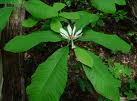
This VERY sad little ragtag collection of plants represents our future collection of uncommon, decidious American magnolia.

I managed to find a small grower of three magnolia varieties I've had trouble finding at local nurseries - Magnolia tripetala, Magnolia macrophylla, and Magnolia acuminata (the cucumber magnolia).


The first two species are well known for their huge leaves and typical white, magnolia-type flowers. The latter, for its cucumber-like fruit and large size.


In addition, we have been adding other American species such as the Franklinia, Vernal Witchhazel, Winterhazel, Ilex opaca, white and burr oak, native viburnum, Asimia (paw paw), Metasequoia, Birch, Tulip poplar, Beech, American persimmon, Sassafras, Catalpa, and Taxodium to name a few.

We also added 3 Princeton elms to flank the main house. 'Princeton' is a true, 100% American elm that was reproduced from a tree found in Princeton, N.J., with innate resistance to Dutch Elm disease.

We look forward to being able to reintroduce American chestnut trees back onto the property as they become available through the work of the American Chestnut Foundation, an organization working to create a blight resistant American elm, by crossing it with the more resistant Asian chestnut tree.

Chestnuts were once the predominate tree in our neck of the woods and our timberframe house is made of huge chestnut logs harvested on the property by Benjamin Whitmore in the mid-18th Century.

In addition, the fruit was a valuable source of food for both the people and livestock alike.

The Franklinia alatamaha tree has an interesting history. It was first described Philadelphia botanists John and William Bartram growing along the Alatamaha River in modern-day Georgia in October 1765.

William Bartram collected Franklinia seeds during this extended trip to the South from 1773 through 1776. Right from the beginning, the tree was noted to have an extremely limited distribution.

"We never saw it grow in any other place, nor have I ever since seen it growing wild, in all my travels, from Pennsylvania to Point Coupe, on the banks of the Mississippi, which must be allowed a very singular and unaccountable circumstance; at this place there are two or 3 acres (12,000 m2) of ground where it grows plentifully." W. Bartram 1791.

The tree was last verified in the wild in 1803, and all current stock was derived from these original seed collections in the 1770's. It falls into the tea family and has been noted to be somewhat hard to establish.


More to come!

Monday, July 5, 2010

Meat Goat Performance Testing


I recently delivered 3 goats to the Western Maryland Pasture-based Meat Goat Performance Test in Keedysville, Maryland.


Susan Schoenian, the University of Maryland's resident sheep and goat guru and a host of other researchers, breeders, volunteers, and students have created a wonderful test with the help of a SARE grant.


The Western Maryland Pasture-Based Meat Goat Performance Test is sponsored by University of Maryland Extension and is conducted at the Western Maryland Research & Education Center in Keedysville, MD.

The purpose of the test is to measure performance of various goats on a pasture-only diet, something that is near and dear to our hearts here at Whitmore Farm.

As you may already know, all of our animals are raised on pasture for environmental, humanitarian, and pro human-health reasons. In addition, we are very interested in reintroducing better performance into our heritage-American breed of goat, the myotonic or Tennessee fainting goat.


For too long, the myotonic goat has been bred primarily as a pet animal, and we hope to restore and improve on its qualities as a 'meat' goat.

So you can see how this performance test would provide an excellent forum for us to test our animals and see how we're doing on our breeding program.


For those of you interested in following the performance test, please feel free to check in with Susan Schoenian's blog and follow the progress of our little goatlings as they compete with goats from all around the country...go TEAM WHITMORE!

We are listed on the spreadsheets under OZKUM and I have 3 goats entered.


At the end of the test, the best animals are put up for auction as stud animals and go on to happily create many more goatlings! lol

Monday, June 28, 2010

What is a fainting goat?


When I tell people we sell goats, the next question is usually 'what kind?'. When I tell them I sell Tennessee Fainting goats, I usually get a blank stare or a faint recollection of 'having heard' of that kind of goat before. Other common names used to describe this unique American breed include nervous goats, wooden-legged or stiff-legged, and scare-dy goats.


The goats originated in 19th Century Tennessee when an itinerant farm hand, said to originate from Canada, showed up in Marshall County, Tennessee, with 3 does and a buck that were noted to 'faint' when startled. A year later this mysterious man moved on but only after selling his goats to a local country doctor, who was interested in examining this unusual neuromuscular disorder, Dr. Mayberry.


Tennessee Fainting goat is a bit of a misnomer - they actually have a congenital myotonic disorder, commonly referred to as Myotonia congenita, which in medical latin, is pretty non-specific. These goats don't actually faint, they stiffen and often fall over, hence the association to 'fainting'.


I usually refer to them as myotonic goats, as I feel this most accurately describes their condition.

When in a stiffened or down position, these goats are completely awake and aware of what's going on around them.


The molecular exact nature of their neuromuscular disorder has been studied and is not well-understood. Myotonia congenita in goats appears similar in many ways to diseases in humans and other animals sometimes referred to as channelopathies, including Thomsen's Disease and Becker's Myotonia congenita. These human disorders are characterized by painless, persistant muscular contraction following voluntary muscle contraction, and muscle hypertrophy. Cardiac and smooth muscle is not affected. We have more information on the exact nature of these disorders because humans that have these disorders can describe what and how they feel. We do not have this luxury in our goats.


Myotonic goats are highly variable in appearance and come in all sizes, shapes, hair lengths, and eye color. The breed standard boils down to two important qualities - the presence of some degree of myotonia and the proper ear set, what I typically call 'helicopter ears'. A certain bug-eyed appearance is also considered classic for the breed but is not required.


A classic description might describe a black & white goat with spotting or a belt, 'helicopter' ears, bug-eyed, and myotonia. Myotonics could be described as both a composite and a landrace breed. In other words, they are a mixed breed originating from those initial four animals but bred with other local breeds of the time, most significantly the Spanish goat, another heritage American breed.


Landrace refers to a breed that developed in geographic isolation. Those formative years in the hot, humid summers and mild winters of Tennessee means that myotonics now have a relatively high resistance to parasites like the barber pole worm as compared to other breeds like the Boer.


Myotonics are classified as a meat goat because of their tendency to have hypertrophied musculature giving them a higher meat-to-bone ratio (3:1) than a normal meat goat (2:1). This translates into more meat on a smaller skeletal frame than what would be normally expected for the size of the animal. Some chefs say they have exceptional flavor and texture as well, which might also be related to their myotonia. They are listed on the ALBC's Arc of Good Taste.

Myotonic goats also make excellent pets. They do not climb fences and have a sweet, friendly disposition.


Sunday, June 20, 2010

ROUND UP - the DDT of our generation?

Recently, I've been reading more about the chemical herbicide ROUND UP and its dangerous and detrimental side effects on the environment and human health.

I'm a child of the 60's and 70's and I remember a time when a trip to the hardware store usually meant only finding a small area dedicated to herbicides and pesticides.

We certainly did not rely on these chemicals to maintain a healthy garden and it was rare that my father would even travel down that aisle, much less stop and buy something.

The smell was awful and I was told to wash my hands thoroughly if I touched one of the bags because these were clearly 'dangerous chemicals' (my father's words, not mine).

My first recollections of an intrusion into the status quo was the proliferation of fertilizer and herbicides in lawn mixes designed to keep you lawn 'healthy, green, and weed free'.

My father naively added these products to his summer routine in a futile attempt to keep up with our neighbors who were much more diligent and compulsive about their lawns, and as it turns out, much more damaging to the environment and possibly their own health.

Fast-forward to modern day. We are now bombarded with ads touting the benefits of a 'healthy' lawn and a weed-free yard. Based on the images of a 'healthy' lawn as defined by the chemical industry, it is a monoculture of one type of grass, deep dark green and completely devoid of 'weeds' and life.

So, lets ask the question - how many times in nature does one see a monoculture such as this? The fact is nature abhors monocultures and it is very UNnatural and I suggest damaging to try and create one.

Getting back to the brainwashing of America - 'smart' homeowners are shown 'shooting it out' with obviously less intelligent neighbors to destroy unwanted 'weeds' by using stronger and stronger, and more persistant chemicals.

The option of doing nothing or using a more environmentally friendly form of weed control never comes up.

Here is an excerpt from an Organic Consumers' Association interview with researcher, Don Huber, a retired Purdue Researcher, who discusses some of his findings when looking at ROUND UP and its effects on the environment and human/animal health:


Another French study found problems with ROUND UP's toxicity towards human (and presumably other animal) cells, in particular embryonic and stem type cells.


A joint study in Canada and at Harvard School of Public Health found children with higher than median levels of the pesticide malathion in their urine were 55% more likely to develop ADHD than children with lower levels of malathion in their urine.

Malathion is an organophosphate compound and is the most commonly used insecticide in the U.S. It can be found in significant levels on many fruits and vegetables commonly eaten by children and has been associated with developmental delay in children of migrant workers who pick fruit.

Malathion, like ROUND UP, is described as being rapidly degraded in the environment and having little residual effect. Hmmmm.....


Unfortunately, as outlined in the movie The World According To Montsanto, our government agencies responsible for regulating these industries and protecting us from dangerous products, have become compromised.

Compromised both by the power and wealth of these huge corporations and their lobbyists, and by the infiltration of these very same agencies by former lobbyists/corporate executives/attorneys who are then appointed to important positions within the USDA and other federal agencies because of their experience in modern agriculture. Talk about putting the fox in charge of the chicken house!


So what other options exist for handling true 'weed' and pest problems in the garden?

1. First of all, I would urge everyone to redefine their idea of what a 'weed' or a pest is and whether a monoculture of grass for example should be the desired endpoint for the perfect lawn.

Remember, 'pesticides' are equally deadly to beneficial insects in the garden. I prefer the word insecticide, because you must remember that whenever you reach for an insecticide, whether organic or not, you will be killing both beneficial and damaging insects.

So, it reminds me to think twice, three-times and to rethink my options - are there any other ways of controlling this problem? Am I contributing to the problem i.e. wrong plant, wrong place, wrong time of year?

2. There are many options for weed control that do not involve the use of dangerous chemicals such as:
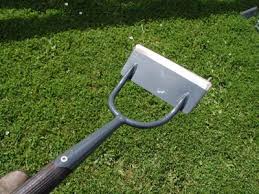
Glaser 7" Stirrup Hoe Head
  • HOES: stirrup/glaser or dutch-type hoes are highly effective at cultivation large areas and keeping them weed free and are really easy to use. By regular hoeing, weeds eventually die and and the soil becomes soft and friable. Quick and easy passes of these hoes will clear large areas and render them weed-free, also improving water penetration and compaction problems.
  • SMOTHERING TECHNIQUES: highly effective at creating new beds, killing turf, and sterilizing large areas.
Newspaper can be used around the base of plants to smother weeds. Overlap thick layers, water into place, and cover with mulch to create an attractive, environmentally-friendly weed free area for new plantings.

'Biodegradable' plastics made from cornstarch are starting to appear on the market and can also be used to smother out larger areas, composting directly into soil over one season, then tilled in in the fall. There are some problems with these new products but my point is as demand builds and people BUY-COTT products, they will improve and hopefully replace more damaging products already in heavy use.

Here's an article from Mother Earth News discussing some of the problems with current degrable products on the market at present:

  • 10% vinegar, available very inexpensively at most asian grocery stores, can be used as a spot treatment and will also 'burn' larger areas prior to the use of smothering techniques. You should plan on liming after tilling prior to planting these areas unless planting acid loving plants like hollies and azaleas. These vinegar acids will be degraded quickly and buffered by the soil.
  • We use a Weed Dragon for areas around the barn and house. Highly-effective but obviously relies on natural gas to burn plants:
  • And of course, the old-fashioned hand digging techniques of weed control.
3. Solarization & 4. Bio-fumigation.

I'm not going to spend a lot of time on these two techniques other than to say that they are very effective in particular for organic vegetable gardeners or sterilizing large beds prior to planting, but are not particularly useful for spot-weeding.

5. Natural substances for pest control:

There are a wide array of organic subtances that can be highly effective in controlling pest and disease problems such as: liquid detergent (dishwashing soap), oils (canola, olive, mineral), capsacin/hot pepper powder, liquid garlic (sold as garlic barrier brand at garden centers), sabadilla, pyrtherin, neem oil, kaolin clay, karanja oil, and the list goes on and on.

While you should not automatically assume these compounds to be benign, they are naturally-derived and have low-persistance in the environment. This requires more frequent application but seems to be associated with less environment toxicity and a more targeted effect on the desired plant and pest problem.

6. Beneficials: Parasitic and beneficial insects are becoming much more readily available and can be highly effective on controlling or eliminating pest problems. Many do not need to be introduced but will simply return if the gardener stops spraying chemicals that are equally-toxic to beneficial and damaging insects alike.

Two that we have used with great success on our farm have been beneficial nematodes (for japanese bettles) and parasitic wasps, for fly control.

Another beneficial = chickens: We had terrible problems with ticks when we first moved to the farm. Now, we rarely find a tick and we walk through brush, tall grass and under trees daily. Guinea hens are thought to be even more effective than chickens at tick control.

I could go on and on about avoiding or eliminating the use of chemical herbicides, pesticides, and fertilizers in the garden. My point in making this post is to:

  • make consumers aware that these benign chemicals may not be as benign as we are led to believe,
  • that you cannot rely on the government to deny market access to companies like Montsanto,
  • and that there are good alternatives to the use of chemicals in the garden that will leave us all happier, healthier and richer in the end.
This is where the idea of a BUY-COTT comes in - the best way we have of effecting a change is by changing where and what we spend our money on.

So remember, buy wisely, ask questions, and don't believe anything you hear from corporate America!


Wednesday, June 16, 2010

The cost of sprawl.

Hello fellow bloggers! I wanted to post a letter Will recently wrote for the Frederick News Post regarding a recent push to rezone two large farms north of Frederick (Maryland) city limits for development.

This rezoning was an initiative pushed through at the last minute by the outgoing mayor with very little public input and a LOT of misinformation.

Will's letter was in response to a letter in the editorial section of the Frederick paper from a lawyer attacking those opposed to this rezoning and the County's new Comprehensive Plan, a blueprint for how the county should develop land to meet anticipated needs over the next decade.

Many people don't realize or think about the implications of suburban sprawl, but its affects are profound and far-reaching:

1. Loss of farmland and hence, increased centralization, homogenization, and industrialization of our food supply.

2. Adverse environmental impacts associated with loss of habitat, more hard surfaces, more chemicals being applied to lawns, etc - this is a VERY long list.

3. Increased carbon footprint to heat, cool, and maintain large homes with large lots.

4. High expense to municipalities to provide services to these sprawling communities.

5. Dependence on fossil fuels and automobiles as walking no longer becomes an option.

And so on, and so on....my point is sprawl affects us all in profound and sometimes unexpected ways. It touches on our lives, usually in a negative way, both as individuals and as a society.

I would encourage anyone looking to buy a home, to consider the advantages of smart growth and urban living as an alternative to sprawl.

Here is Will's letter:

Balance and perspective . . .

In his May 23rd commentary, Thomas Lynch attempts to cast illusions, build straw men and further polarize growth and development issues. The very things he suggests we rise above. Lynch unfairly characterized the recently adopted comprehensive plan, and Frederick County government in general, as being unfriendly towards the business community. As a business owner who moved to Frederick County specifically to start a business, I can tell you that nothing could be further from the truth.

The hundreds of properties that Lynch refers to as being “downgraded” constitute less than 1% of the properties covered under the comprehensive plan. In addition, within that 1%, a large number of the properties were re-evaluated as a result of new, updated flood zone maps issued by FEMA. Most reasonable would agree that properties in a flood zone are not good candidates for development. Furthermore, the county commissioners specifically acknowledged that some of the rezoned properties could still be developed if annexed by the adjacent municipalities as part of their growth plans. This ensures that new development can be serviced by adjacent municipal infrastructure. In the end, there were only a handful of property owners out of the ~230,000 residents in Frederick County that were adversely affected. Little consolation for those individuals for sure, but not a bad track record for elected officials trying to balance the desire of individuals with the best interests of the community at large.

The business community in Frederick County is diverse and made up of more than just developers. For example, Frederick County has more farms than any other county in Maryland. The number of farms in Frederick County is also up 13% from 2002, unlike many other counties. Those counties that focused on development as the main engine of growth have suffered the most as a result of the bust in the construction industry. The industry was premised on people continually upgrading to the next most fashionable neighborhood or floor plan. Studies have shown that land zoned agriculture puts money in the bank for local governments. They pay more in taxes than they consume in services. The opposite is true for new development. They cost existing taxpayers more than they bring in.

The County Commissioners spent two years and countless public meetings updating the comprehensive plan. The process was open and fair. All voices were heard. The final comprehensive plan does exactly what it is supposed to do. It accommodates the population growth that is projected to occur in Frederick County over the next 20 years. It aligns growth with existing infrastructure, minimizing the cost to existing residents and taxpayers. If developers are looking for something to do, look no further than the Golden Mile or any other half dozen communities in Frederick County that are in desperate need of redevelopment.

William Morrow

Whitmore Farm

Emmitsburg, MD